Essays on the long history of money.
New writing on what money was, what it is, and what it's becoming. Some posts will focus on the projects while others will be tools that you can use to better understand a topic, read into the source material, and use for your own teaching or understanding of the long history of money.
A Promise Printed on Land: The Assignats of Revolutionary France
“On February 19, 1796,” the historian Andrew Dickson White writes, “the copper plates of the assignats were broken up, and it was decreed that no more assignats be issued” (White 68).
By Deanna Heikkinen
When Honor Rests on Giving Wealth Away: The Potlatch and the Gift Economy
What happens to “wealth” when a host’s honor rests on giving it away?
Read more →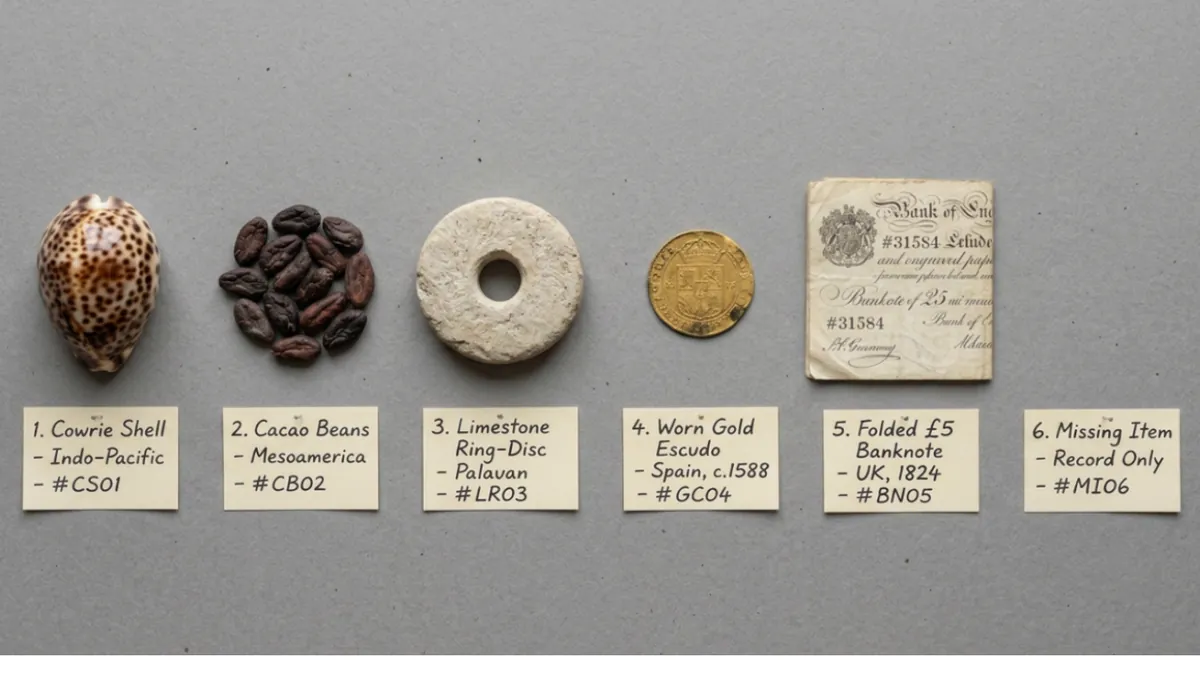
What Makes Good Money, A Summer’s Evidence
All summer this project has told stories: cowrie shells counted out in African and Asian markets, stone wheels resting against Pacific houses, salt paid to Roman soldiers, pepper ransoming a city, a Florentine coin that kept its weight for two and a half centuries, and gold anchoring the trade of the world for forty years…
Read more →
The Gold Standard, From Newton’s Mint to Nixon’s Address
The classical gold standard has acquired a reputation for antiquity that its dates do not support. As a working international system it lasted roughly from the 1870s to 1914, a span of about forty years, and yet to the people who lived under it, it felt permanent, less a policy than a fact of nature.…
Read more →
Money as Social Agreement, From Stone Ledgers to Lombard Street
In 1903 the American naturalist William Henry Furness III spent two months on the island of Yap and found a monetary system that has puzzled and delighted economists ever since. His description of the money itself is worth quoting, because the strangeness is the point: Their medium of exchange they call fei, and it consists…
Read more →
The Growing Pains of New Money, Part 6: How Trust Gets Built
Every new form of money in history has gone through growing pains: counterfeits, broken promises, lost value, and hard-won fixes. This series tells those stories from the primary sources, because the pattern is easier to see from a distance, and because knowing the pattern is the best preparation for living through it. For two weeks this series has watched new money break: shell money flooded by counterfeits, coins hollowed by their own issuers, paper printed past its backing, banknotes that failed the moment everyone tested them at once. Every break eventually produced a fix. This final post is about the biggest fix of all, and the disaster it took to force it.
Read more →
The Growing Pains of New Money, Part 5: Not Worth a Continental
Every new form of money in history has gone through growing pains: counterfeits, broken promises, lost value, and hard-won fixes. This series tells those stories from the primary sources, because the pattern is easier to see from a distance, and because knowing the pattern is the best preparation for living through it. America’s founding generation did not learn about the growing pains of new money from books. They were paid in them.
Read more →
The Growing Pains of New Money, Part 4: Europe’s Expensive Lessons
Every new form of money in history has gone through growing pains: counterfeits, broken promises, lost value, and hard-won fixes. This series tells those stories from the primary sources, because the pattern is easier to see from a distance, and because knowing the pattern is the best preparation for living through it. The series so far has followed new money from shells to stamps to the first paper notes in China. Now the experiment reaches Europe, and Europe learns everything China learned, the hard way, in about 60 years.
Read more →
The Ledger and the Empire, The Medici and the Birth of Banking
In 1397 Giovanni di Bicci de’ Medici moved his banking operation from Rome to Florence. He commanded no army, held no title, and owned no mine. What he had was a ledger, a network of correspondents in the trading cities of Europe, and a reputation for paying what he owed. Within two generations his family…
Read more →
The Growing Pains of New Money, Part 3: the Paper Experiment
Every new form of money in history has gone through growing pains: counterfeits, broken promises, lost value, and hard-won fixes. This series tells those stories from the primary sources, because the pattern is easier to see from a distance, and because knowing the pattern is the best preparation for living through it. The first two posts in this series watched money made of stuff and money made of metal each break and each get patched. This one is about the biggest leap money has ever taken: the day it became paper, which is to say, the day it became almost nothing but promise.
Read more →
The Growing Pains of New Money, Part 2: The Stamp of Trust
Every new form of money in history has gone through growing pains: counterfeits, broken promises, lost value, and hard-won fixes. This series tells those stories from the primary sources, because the pattern is easier to see from a distance, and because knowing the pattern is the best preparation for living through it. In the last post, we watched the first growing pain of new money, the quality problem, break out among tobacco planters and wampum traders in colonial America. This is the story of the invention that answered it, roughly 2,200 years earlier, and of what happened when the people running that invention began to cheat.
Read more →
The Growing Pains of New Money, Part 1: When Money Was Stuff
Every new form of money in history has gone through growing pains: counterfeits, broken promises, lost value, and hard-won fixes. This series tells those stories, revealing a pattern worth knowing: new money always has growing pains. From the improvised wampum of early American colonists to the makeshift currency of WWII prison camps, the challenges of trust and value have persisted. As we explore these tales, we uncover how human nature meets new promises, reminding us that a young money facing problems is not a failure, but a sign of its evolution. Join us as we delve into the fascinating history of money.
Read more →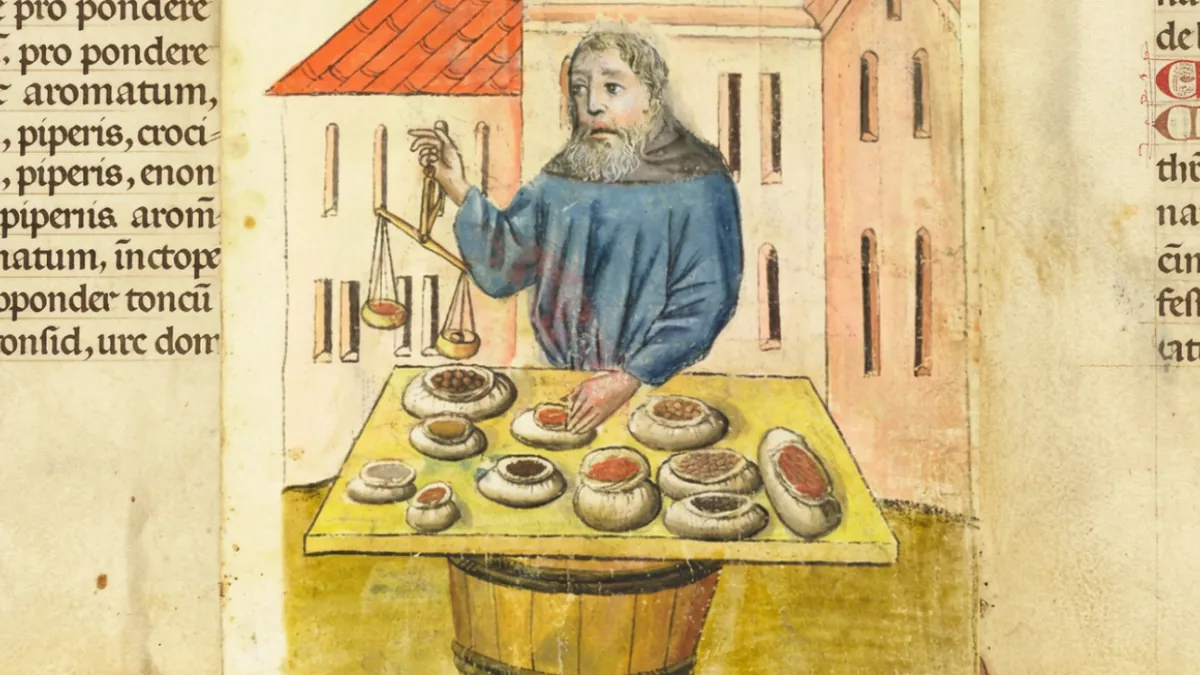
Pepper as Money, The Spice Trade from Rome to the Age of Sail
In the year 408, the Visigoth king Alaric camped his army outside the walls of Rome and named the price of the city’s survival. The historian Zosimus, our fullest source for the negotiation, records terms that should stop a modern reader mid-sentence: five thousand pounds of gold, thirty thousand pounds of silver, four thousand silk…
Read more →
Twelve Feet of Limestone at the Bottom of a Lagoon: What the Yap Stones Teach Us About Money
Somewhere in a lagoon off the coast of a small island in the western Pacific, a limestone disk lies in the dark. Nobody alive has ever seen it. It went down two or three generations ago, when the canoe carrying it home from Palau capsized in a storm. The men on board made it back…
Read more →
The Birthday of the Man Who Gave Governments the Keys to Your Money
John Maynard Keynes turns 143 today. He convinced the modern world that spending, debt, and managed currencies were virtues. The bill is still coming due. There is a quote that every economics student knows. It is treated as wisdom, printed on classroom walls, cited in policy papers as though it settles arguments. It goes like…
Read more →
Does Money Need Intrinsic Value? What the Austrians Got Right, and What History Complicates
The Austrian economists gave us the most coherent account of money’s origins that Western economic thought has produced. Menger explained how money emerges spontaneously from market exchange. Mises proved, logically, that money must trace back to something that was valued before it became money. Rothbard sharpened both arguments and added the political implications: that government…
Read more →
Everyone Uses It. Almost No One Can Define It
The word “money” comes from a goddess. Specifically, from Juno Moneta, an epithet of the Roman goddess Juno, in whose temple on the Capitoline Hill the Romans minted their coins from at least the fourth century BC onward. The Latin moneta passed into Old French as moneie, and by around 1290, the word appeared in…
Read more →
What the framers wrote about money, and what happened to it: from Philadelphia in 1787 to the closing of the gold window in 1971
On May 25, 1787, the Constitutional Convention formally opened in Philadelphia. The delegates had been arriving for eleven days, waiting for a quorum. What they wrote that summer shaped American money for the next two centuries, and the framework they built has been altered, in stages, ever since. This is a long piece for readers…
Read more →